



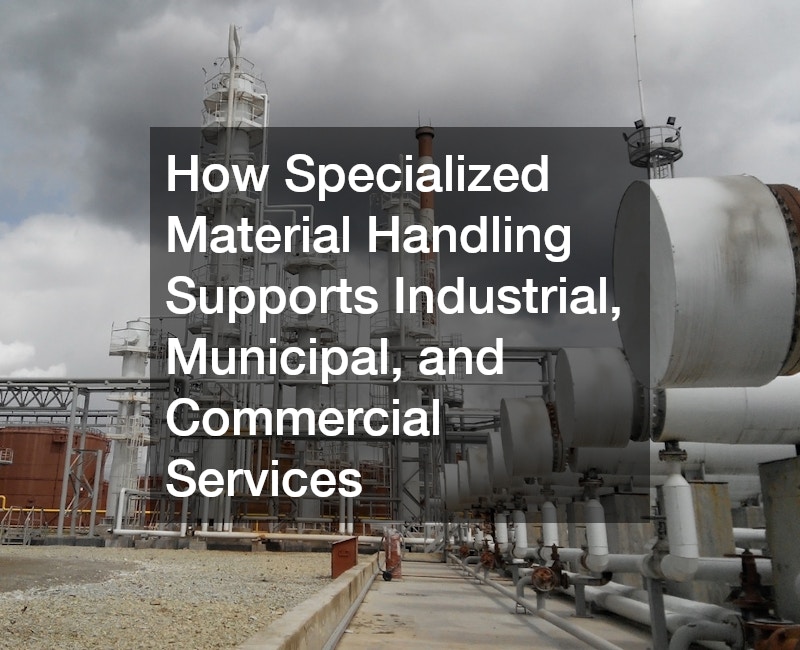
Material handling is often associated with warehouses, forklifts, pallets, conveyors, and shipping docks. While those are important parts of the process, specialized material handling reaches far beyond traditional storage and transportation. In industrial, municipal, and commercial settings, it supports the movement, protection, installation, maintenance, and disposal of materials, equipment, and components that keep essential services running.
From manufacturing floors to public works facilities, service yards, recycling centers, water systems, pool maintenance operations, and precision machining shops, the ability to handle materials correctly affects safety, efficiency, equipment life, and service quality. Many organizations depend on specialized handling methods because the materials they work with are heavy, fragile, hazardous, weather-sensitive, pressure-sensitive, or difficult to move without proper planning.
A one-size-fits-all approach rarely works in these environments. The handling needs of a fabrication shop are not the same as those of a municipal maintenance department. A company that services water treatment systems faces different challenges than one that manages pavement coatings, athletic facilities, or industrial testing equipment. The right handling process depends on the type of material, the environment, the equipment being used, and the final service being delivered.
The Role of Planning in Heavy-Duty Service Environments
Specialized material handling begins with planning. Before materials are lifted, transported, stored, or processed, teams need to understand what they are moving and why it matters. This includes the weight, size, shape, fragility, chemical makeup, storage requirements, and risks associated with each item.
An industrial facility may handle steel, tubing, machine parts, testing equipment, chemicals, sealed vessels, or finished components. A municipal operation may handle signage, water system equipment, road repair materials, landscaping supplies, waste containers, and public works machinery. Commercial service companies may handle cleaning equipment, parts, pumps, tools, coatings, and customer-facing service materials.
Each category requires a different approach. Some materials must be protected from moisture. Others must be isolated from contaminants. Some require secure racking or lifting devices. Others need temperature control, ventilation, or protective packaging. When organizations overlook these details, they increase the risk of damage, delays, injuries, and costly rework.
Supporting Water, Utility, and Environmental Services
Municipal and rural utility services depend heavily on the proper movement and maintenance of equipment. Water systems, pumping stations, treatment facilities, and environmental management operations often involve large components that must be transported carefully and installed in outdoor or remote settings.
In rural water management, equipment such as an aeration windmill may be used to support pond or water quality applications. Handling this type of equipment requires attention to height, balance, anchoring parts, blades, tower sections, and site conditions. Crews may need to transport components across uneven ground, stage them safely, and assemble them without damaging mechanical parts.
Water treatment and conditioning services also rely on careful logistics. Companies that provide local water softeners often manage tanks, resin, valves, plumbing components, salt, and filtration equipment. These items may need to be moved through homes, commercial buildings, utility rooms, basements, or tight mechanical spaces. Proper handling helps prevent property damage, protects equipment connections, and allows technicians to complete installations more efficiently.
For municipal water departments, materials must be stored so they can be accessed quickly during repairs or emergencies. Replacement parts, pipe sections, fittings, meters, pumps, and testing supplies need to remain organized and protected. When a water main issue or system failure occurs, fast access to properly stored materials can make a major difference in response time.
Protecting Materials From Damage and Deterioration
Not all material handling challenges involve lifting heavy objects. In many industries, the bigger challenge is protecting materials from environmental exposure, chemical reaction, or physical degradation. This is especially true for metals, coatings, sealed systems, and parts used in demanding environments.
Industrial companies often rely on corrosion testing to determine how materials will perform when exposed to moisture, salt, chemicals, or other harsh conditions. The testing process itself depends on careful handling. Samples must be labeled correctly, stored under controlled conditions, transported without contamination, and documented accurately. If test specimens are mishandled, results may be unreliable, which can affect product development, compliance, and customer confidence.
Material protection is also important in fabrication, manufacturing, construction, and maintenance settings. Metals may need to be separated by type to prevent cross-contamination. Coated materials may require padded racks or covered storage. Chemicals may need spill containment and labeling. Sensitive measuring instruments may require cases, calibration records, and clean storage areas.
Moving Sensitive Equipment in Technical Service Fields
Some industries handle equipment that is both valuable and highly sensitive. This includes testing devices, calibration tools, pressure systems, leak detection equipment, and inspection instruments. These items may not be large, but they require disciplined handling to preserve accuracy and prevent damage.
For example, helium leak detectors are used in applications where sealed systems, vacuum equipment, or pressure-sensitive components must be checked for leaks. These instruments need to be stored and transported carefully because they can include delicate sensors, pumps, electronics, and calibration requirements. Rough handling, dust exposure, impact, or poor storage can affect performance.
Specialized material handling for technical equipment may include protective cases, shock-resistant carts, climate-controlled storage, check-in and check-out procedures, and scheduled maintenance tracking. When companies invest in the right handling systems for sensitive equipment, they reduce repair costs and improve service reliability.
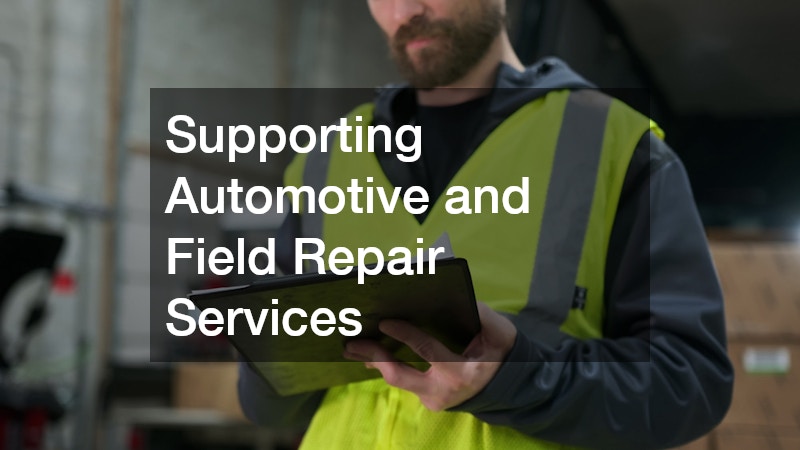
Supporting Automotive and Field Repair Services
Commercial service providers often operate in fast-moving environments where technicians need to transport tools, replacement parts, and equipment directly to the customer. In these settings, material handling affects both productivity and customer experience.
Businesses that provide windshield repair services, for example, may need to manage glass repair resins, curing tools, injectors, cleaning supplies, protective materials, and mobile service equipment. These materials must be organized in a way that prevents spills, breakage, contamination, and delays. A technician who can quickly access the correct tools and supplies is more likely to complete the repair efficiently and professionally.
The same idea applies to many mobile service industries. Field teams often work from vans, trucks, trailers, or small service units. Without proper storage and handling, tools can shift during travel, supplies can be damaged, and technicians can lose valuable time searching for what they need.
Handling Materials in Cleaning, Restoration, and Surface Maintenance
Municipal and commercial properties require ongoing maintenance to stay safe, clean, and functional. Material handling plays a major role in these services because crews often work with equipment, cleaning agents, waste materials, protective gear, and surface treatment products.
Graffiti removal is a good example. Crews may need to handle pressure washers, surface-safe chemicals, absorbent materials, containment tools, ladders, hoses, and waste collection supplies. Different surfaces require different cleaning methods, so materials must be organized by application. Masonry, painted walls, metal signs, concrete, and glass may all require different products and techniques.
Safe handling is especially important when chemicals are involved. Cleaning agents need to be stored in labeled containers, separated from incompatible materials, and transported in a way that reduces spill risk. Workers need access to personal protective equipment, ventilation considerations, and disposal procedures. Poor handling can lead to property damage, environmental issues, or worker exposure.
Improving Efficiency in Recreation and Facility Services
Commercial recreation facilities, schools, municipalities, and private property owners often depend on specialized service providers to maintain athletic, aquatic, and outdoor spaces. These jobs involve unique material handling challenges because work is often performed on-site, around public access areas, and under weather-related constraints.
Pool cleaning companies must manage chemicals, vacuums, brushes, hoses, testing kits, filters, pumps, and safety equipment. The work may take place at residential properties, hotels, gyms, apartment communities, or municipal pools. Proper handling keeps chemicals secure, prevents cross-contamination, and allows technicians to complete service routes efficiently.
Athletic facility maintenance has its own requirements. Track resurfacing companies often manage coatings, binders, rubber materials, tools, striping equipment, and surface preparation machinery. These materials may need to be staged carefully to maintain project flow and protect the surface during installation. Weather, curing times, and site access all affect how materials are handled.
Material Flow in Manufacturing and Precision Production
Manufacturing environments depend on the precise movement of raw materials, work-in-progress parts, tooling, finished products, and scrap. The more specialized the production process, the more important material handling becomes.
In precision manufacturing, Swiss CNC machining is often used to produce small, complex, high-tolerance parts. Handling these components requires special care because even minor damage, contamination, or mislabeling can create quality problems. Small parts may need trays, separators, clean containers, barcode labels, and controlled movement between machining, inspection, finishing, and shipping.
Material handling in manufacturing also supports traceability. Many industries need to know which material batch was used, when it was processed, who inspected it, and where it was shipped. Organized handling systems help maintain that chain of information and reduce the risk of production delays or incorrect shipments.
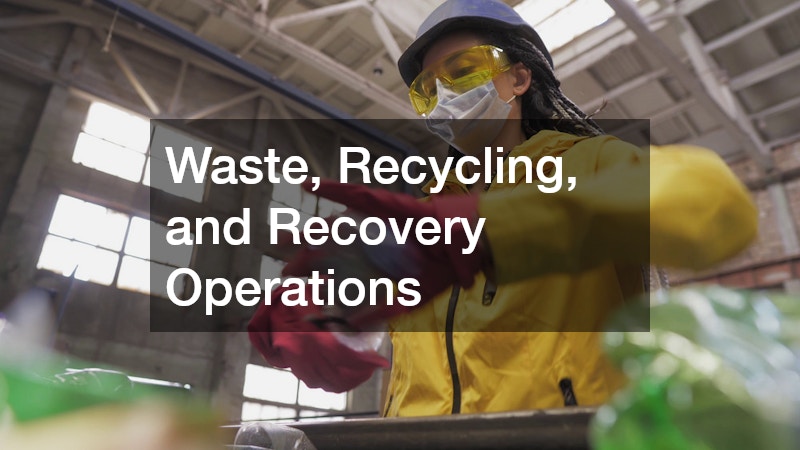
Waste, Recycling, and Recovery Operations
Every industrial, municipal, and commercial operation produces some form of waste or leftover material. Specialized handling helps organizations separate, process, recycle, or dispose of those materials responsibly.
Metal recyclers play an important role in recovering value from scrap materials generated by manufacturing, construction, demolition, automotive repair, municipal work, and commercial maintenance. The handling process begins with sorting. Different metals may need to be separated by type, size, cleanliness, or market value. Ferrous and nonferrous metals often follow different processing paths.
Safe handling is critical in recycling environments because materials can be sharp, heavy, irregularly shaped, or contaminated. Facilities may use bins, cranes, magnets, forklifts, scales, conveyors, and shears to move and process material. Proper traffic flow helps protect workers and keeps customer drop-off areas organized.
Connecting Specialized Handling Across Multiple Service Categories
One of the biggest advantages of specialized material handling is that it creates consistency across very different types of work. A company managing an aeration windmill installation, for example, may not seem similar to a shop coordinating corrosion testing, but both depend on protecting parts, organizing equipment, and moving materials safely from one stage to the next. The same principle applies to field-based services, where technicians providing windshield repair services or installing local water softeners need organized vehicles, secure storage, and clear inventory systems to complete each job efficiently.
Technical and industrial environments also benefit from this shared approach. Helium leak detectors must be protected from impact and contamination, while components produced through swiss cnc machining need careful handling to preserve tight tolerances and prevent damage before inspection or shipment. In both cases, the value of the work depends not only on the equipment or process itself, but also on how materials are stored, moved, labeled, and tracked.
Municipal and commercial maintenance teams face similar challenges in more public-facing environments. Pool cleaning crews must handle chemicals, testing kits, hoses, and pumps responsibly, while graffiti removal teams need to organize cleaning products, containment supplies, and surface-safe tools. Track resurfacing companies must stage coatings, rubber materials, and application equipment in ways that keep projects moving without compromising surface quality. Even metal recyclers rely on disciplined handling systems to sort, weigh, process, and transport scrap safely.
Across all of these industries, material handling is what connects planning to execution. It helps crews arrive prepared, protects valuable equipment, reduces waste, and creates safer worksites. Whether the job involves manufacturing, environmental service, public maintenance, repair work, or recycling, the right handling process turns complex service demands into repeatable, reliable workflows.
Reducing Risk Through Training and Equipment Selection
Even the best storage systems and handling plans depend on trained workers. Specialized material handling requires people who understand the materials they are working with and the equipment they are using.
Training may cover lifting techniques, forklift operation, chemical storage, load securement, spill response, equipment inspection, labeling, personal protective equipment, and emergency procedures. Workers should also know when not to move something without help. Many accidents happen when employees attempt to lift, drag, stack, or transport materials without the right tools.
Equipment selection matters just as much. A facility may need pallet racking, carts, hoists, drum handlers, spill pallets, shelving, bins, mobile storage systems, or climate-controlled cabinets. Field service teams may need vehicle upfits, lift gates, portable ramps, locking compartments, or tool organization systems.
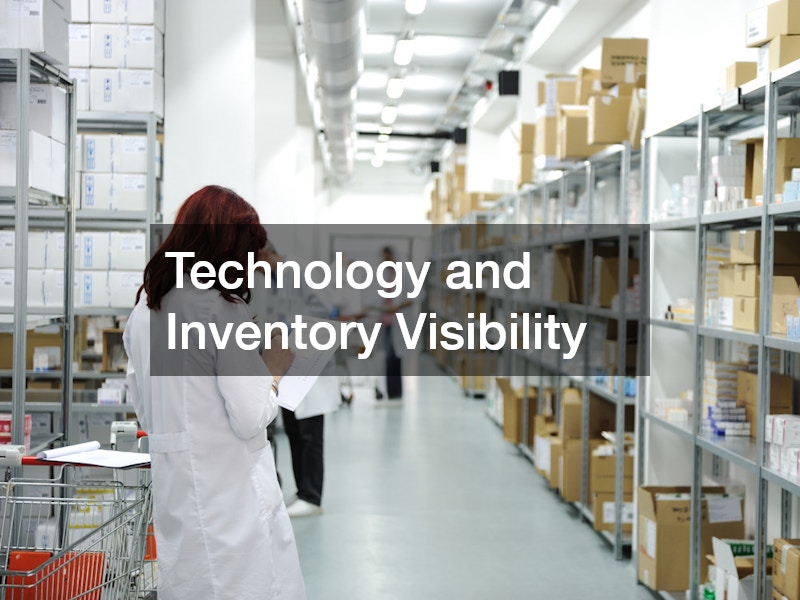
Technology and Inventory Visibility
Modern material handling increasingly depends on digital tools. Inventory management software, barcode scanning, GPS tracking, maintenance logs, and digital checklists help organizations know what they have, where it is, and when it needs attention.
For field service companies, inventory visibility helps reduce repeat trips. Technicians can confirm that they have the right parts and supplies before leaving for a job. For manufacturers, digital tracking supports quality control and production planning. For municipalities, inventory systems can help teams prepare for seasonal maintenance, emergencies, and budget planning.
Technology does not replace physical organization, but it strengthens it. A barcode system is only useful if materials are labeled and stored consistently. A digital checklist only works if teams follow it. The best results come from combining practical storage methods with reliable information systems.
The Invisible System Behind Reliable Service
The best material handling systems often go unnoticed, and that is exactly the point. When equipment arrives intact, chemicals are stored safely, tools are easy to find, parts are protected, and crews move confidently from one task to the next, the entire operation feels smoother. Customers may never see the racks, labels, carts, storage plans, vehicle layouts, or tracking systems behind the work, but they experience the benefits through faster service, fewer mistakes, safer job sites, and more dependable results.
Specialized material handling is the quiet structure behind many essential services. It supports the technician repairing glass, the crew maintaining a pool, the shop producing precision parts, the team removing graffiti from a public wall, the workers preparing a track surface, the specialists testing materials, the recyclers recovering scrap, and the utility crews keeping water systems running. Each service may look different from the outside, but all of them depend on the same basic discipline: putting the right material in the right place, in the right condition, at the right time.
That is what makes material handling more than a back-end process. It is part of the service itself. Whether an organization is managing an aeration windmill, corrosion testing samples, windshield repair services equipment, helium leak detectors, local water softeners, pool cleaning supplies, metal recyclers, graffiti removal products, materials used by track resurfacing companies, or components produced through swiss cnc machining, the way those materials are handled shapes the quality of the work that follows.
Reliable service is rarely the result of one big action. It is built through hundreds of small decisions made before the job is ever finished: how something is stored, how it is moved, how it is protected, how it is labeled, and how quickly it can be found when needed. Specialized material handling brings order to that process, turning complex industrial, municipal, and commercial work into something safer, smarter, and more repeatable.